The Pantry
Olive Oil, Explained
What extra virgin really means, how to read a label, and why pepper is a credential.
Home › The Craft
A basket is not a container of food. It is a composed gift — architecture, season, and appetite in one object. Here is how we build one that tastes as good as it looks.
The gourmet gift basket has survived every retail fashion thrown at it for a simple reason: it is a complete gift. A bottle of wine asks the recipient to find a moment; a basket hands them the moment, the menu, and the napkin. Done well, it is an edible letter. Done badly, it is a cardboard apology with a cellophane bow.
This guide is our working method, refined over years of building baskets for housewarmings, thank-yous, hospital stays, and the long winter stretch of holidays. Nothing here requires a specialty store — only intention, and a little structural thinking.
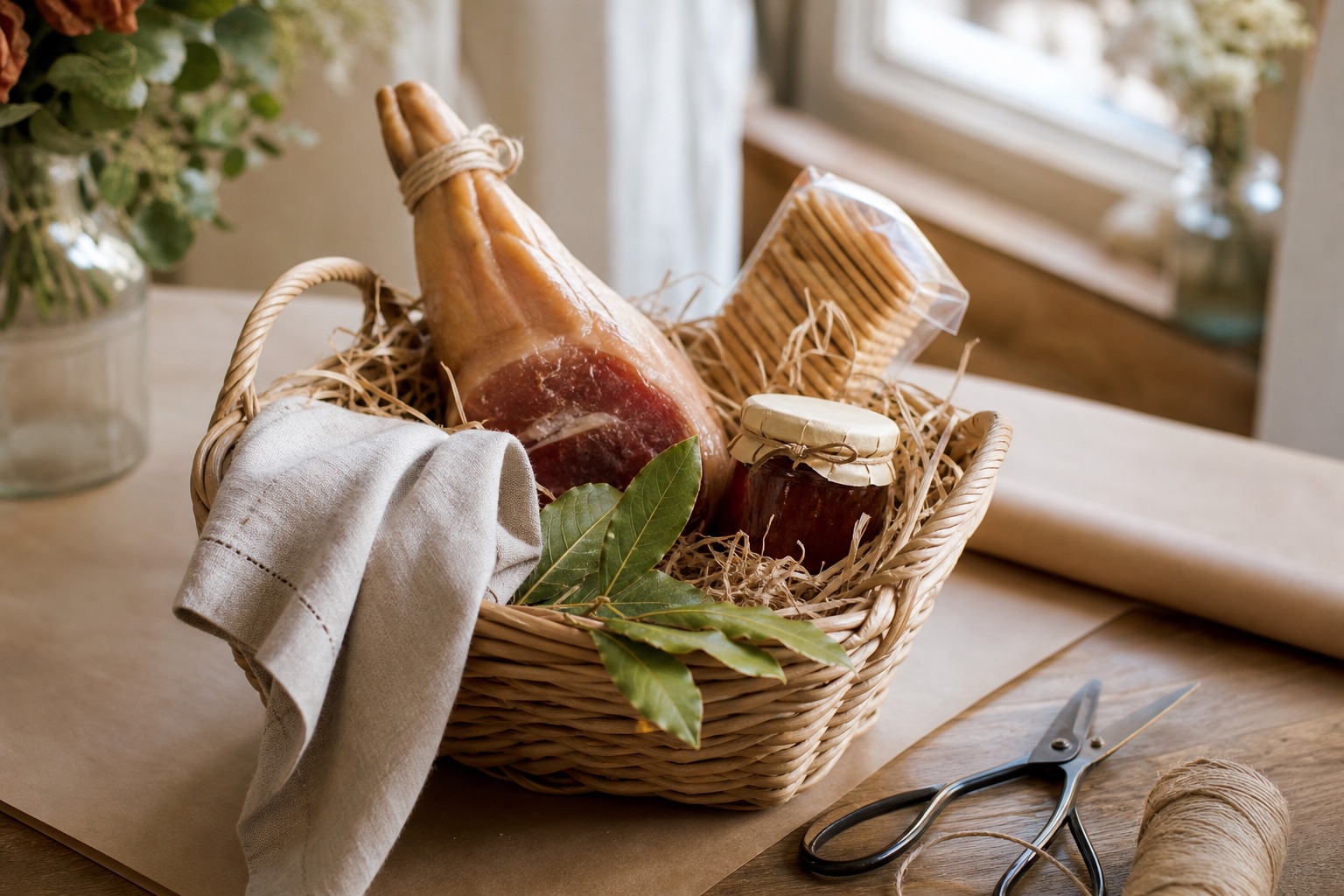
Every strong basket answers one question first: who is eating, and when? A family of five on a rainy Tuesday wants different things than a convalescing friend or a retiring colleague. Before you shop, write a single sentence about the recipient's next two weeks. "New house, no kitchen unpacked." "Finishing night shifts." "Cooking for one since March." That sentence is your shopping list's spine — and our guides by occasion can sharpen it further.
Professional baskets read well from across a room and better from an arm's length. Three structural rules produce that effect:
When we build for the pages of this magazine, we work in four layers, in order:
If you want the anchor to be an everyday luxury instead of a feast, our guide to olive oil explains why one small excellent bottle outperforms a gallon of the ordinary.
A basket's clock starts when you build it. Hard cheeses travel for days; fresh chèvre sulks in hours. Whole loaves hold; sliced bread stales twice as fast. Chocolate melts above about 75 °F — in summer, send it only overnight, and look at the seasonal calendar before committing. Preserve jars, honey, oil, vinegar, nuts in shell, and dried fruit are the marathon runners: they forgive a slow mail service and a recipient who takes a week to say thank you.
One: the everything basket — no anchor, so nothing registers. Two: cellophane pulled so tight the basket looks shrink-wrapped; a sheet of tissue and a wide cloth ribbon age better. Three: scented items packed with food — candles and potpourri belong on a separate shelf, or the crackers arrive perfumed. Four: odd numbers ignored; groups of three and five photograph and feel more composed. Five: a printed card. Handwrite it, even badly. The handwriting is the signature; for more on this, see the wrapping guide.
Finally, remember what the form is for. The old caterers of Texas and the Hudson Valley alike knew it: a basket says "I thought about what you would actually enjoy, and I arranged it for you." The arrangement is half the message. Compose it the way you would compose a note — with a beginning (the anchor), a middle (the companions), and a warm sign-off (the finish).
The Pantry
What extra virgin really means, how to read a label, and why pepper is a credential.
The Craft
Wrapping, cushioning, and presenting a food gift so the first impression matches the last bite.
By Occasion
The occasion decides the food: our hub of guides for every moment worth marking.