The Table
Building the Cheese Board
The pairings that make a varietal honey the board's quiet star.
Home › The Pantry
A jar of good honey is the most reliable food gift on earth — once you know what the varietals mean and why grainy honey is honest honey.
Honey is the only food that never spoils in the jar — archaeologists have tasted three-thousand-year-old honey from Egyptian tombs and lived to publish. It is also the most forgiving gift: kosher, halal, vegan-arguable, gluten-free, shelf-stable, adored by cooks and children alike. And yet most people have never tasted what honey actually is, because most honey on shelves is a blended commodity with the flavor engineered out. Here is the version worth giving.
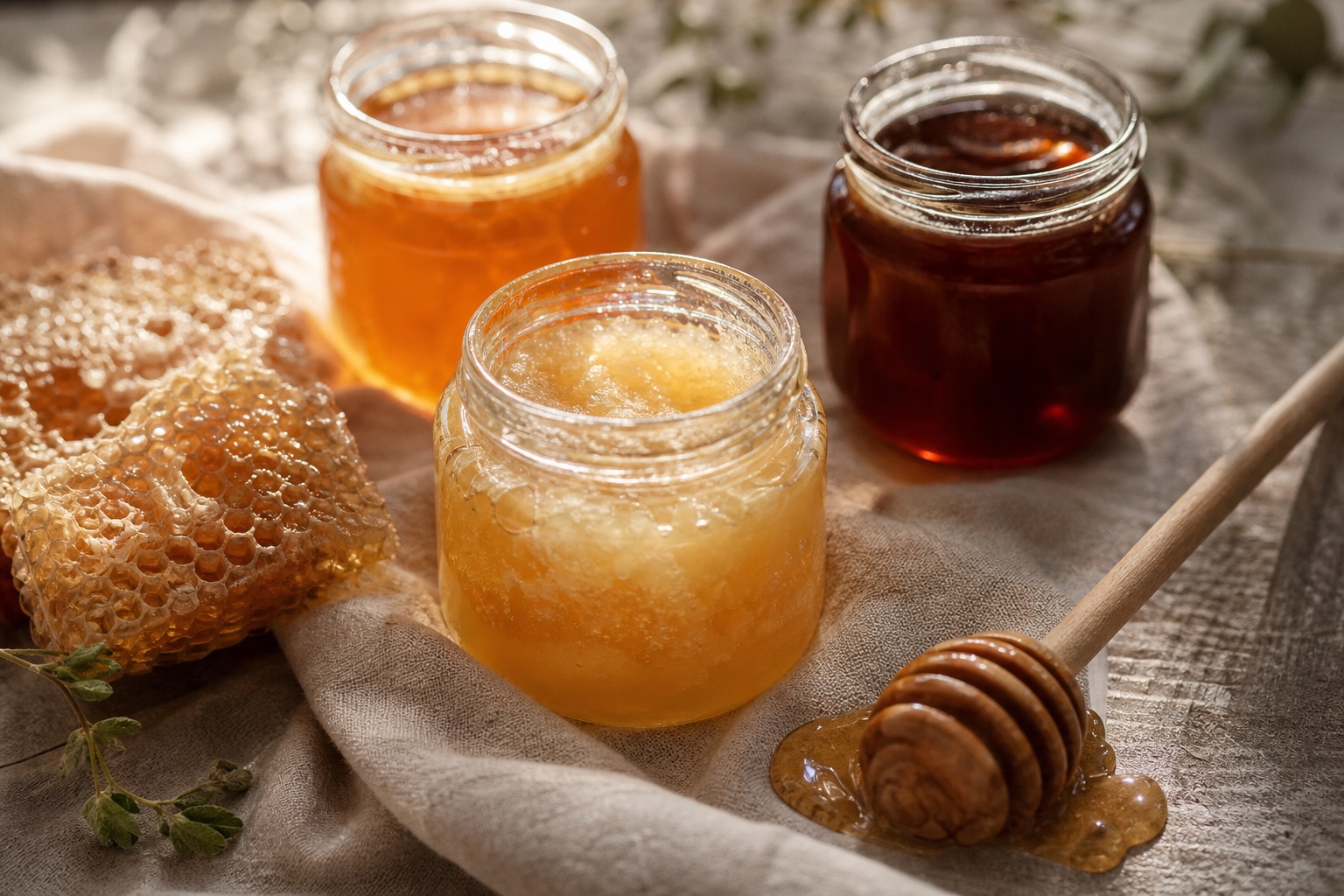
Honey is nectar transformed: bees collect it, add enzymes, and evaporate the water by fanning until the moisture drops below about 18 percent — the level at which it keeps forever. Its color, aroma, and flavor come from the flowers the bees worked, which is why honey is a vintage product, like wine: same hive, different blossom, different year, different honey.
A monofloral honey means the bees had overwhelming access to one bloom. The varietals to know, all available stateside:
Grainy honey is not spoiled — it is honest. Glucose naturally crystallizes, and unfiltered raw honey does it sooner (months) than supermarket honey (never, because it has been filtered to death and often diluted). Tupelo and acacia are the famous exceptions. To restore: warm the jar gently in water below about 95 °F — the temperature of a summer porch, not a stove, because heat above that kills the aromatics. If a "raw" honey never grains over years, read the label again.
Raw means unheated and usually unfiltered — enzyme-rich, pollen-flecked, fullest in aroma. Pasteurized honey is heated for shelf stability and clarity at some cost in flavor; it is not a fraud, just a quieter version. The label tells you more: a named beekeeper and apiary location, "unfiltered," and ideally a harvest year. "Pure honey" with no origin is the commodity shelf; it will taste like sweetness and nothing else, and sweetness alone is not a gift. Our label checks are the same ones the panel runs at the tasting table.
Here is the working wisdom of a decade of catering: when you cannot decide, send honey. Hostess moment, thank-you, housewarming, the winter gift that must survive a parcel truck — a single excellent varietal with a line about why you chose it never misses, which is why it anchors the short list in the gratitude guide. Pair it with a strong cheese and walnuts for the cheese board, bread and butter for the breakfast basket, or tea and a lemon for the get-well register. Build the rest of the basket with our four-layer method — honey's glass jar makes a fine feature beside a kraft-wrapped loaf.
The Table
The pairings that make a varietal honey the board's quiet star.
The Craft
Glass jars need cushioning — the wrap hierarchy and leak-proofing, explained.
By Occasion
Bread, salt, and a honey: the oldest housewarming, still undefeated.